Eye Contact in Telehealth: A Small Change That Makes Virtual Care Feel More Human
On a video visit, the webcam and the patient's face rarely line up, and eye contact quietly breaks. Here's why that matters in healthcare, and how PlexiCam Mag2 lets clinicians put the camera where they're actually looking.

Telehealth solved the hard problems. Patients see physicians from their kitchens. Specialists reach people hundreds of miles away. Follow-ups that once cost a half day off work now take fifteen minutes.
Yet one of the oldest tools in medicine still gets lost somewhere between the clinician and the screen: eye contact.
In an exam room, looking at a patient while you listen is effortless. On a video call, it quietly breaks. The webcam sits above the monitor, and the patient sits in a window somewhere below it. Look at the patient's face and you appear to be glancing down or away. Look into the lens and you lose sight of the expressions you're trying to read.
It sounds minor. It isn't. In a field built on trust, attention, and empathy, the small details of visual communication shape how a conversation feels.
Why eye contact matters in virtual care
Eye contact signals attention, engagement, and personal connection. It doesn't guarantee trust or understanding on its own, but it is part of what makes a face-to-face conversation feel face to face.
That matters most in the moments healthcare is made of. Patients raise sensitive concerns, ask hard questions, and make decisions that affect their lives. Feeling that their clinician is genuinely paying attention makes those conversations easier. When a provider looks toward the patient's image, and the camera actually captures that, the exchange feels more natural and more direct.
Care is also about more than information. Clinicians communicate understanding, compassion, and reassurance through their faces and their gaze as much as through their words. A well-placed camera helps that nonverbal layer come through while they listen and respond.
The goal of good telehealth isn't just to transmit audio and video. It's to make the technology recede so the conversation can take center stage. Patients love the convenience of virtual visits. They still want them to feel personal.
The real culprit: where the camera sits
Most webcams live on top of the monitor. The patient lives in a video window elsewhere on the screen. That gap creates a built-in mismatch between where a clinician looks and where the camera records them looking.
The problem grows with bigger monitors, multiple displays, and telehealth platforms that park the patient window far from the top edge. The conventional setup assumes the camera has to stay put. But the patient's image moves around the screen. Why shouldn't the camera?
Meet PlexiCam Mag2: put the camera where you're looking
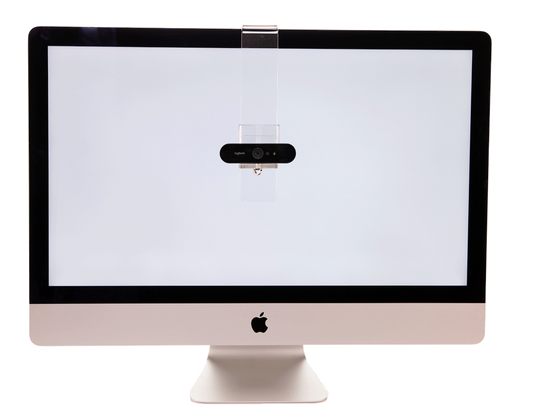
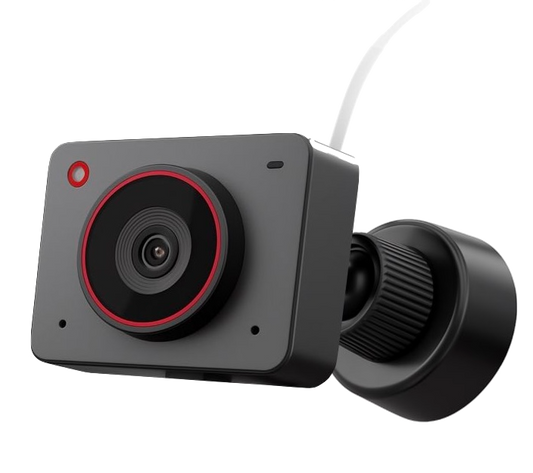
PlexiCam Mag2 is a component that connects to a USB-C webcam so the combined unit can be positioned anywhere on your screen. Instead of being stuck on the top bezel, the camera can sit right where the person you're talking to appears.
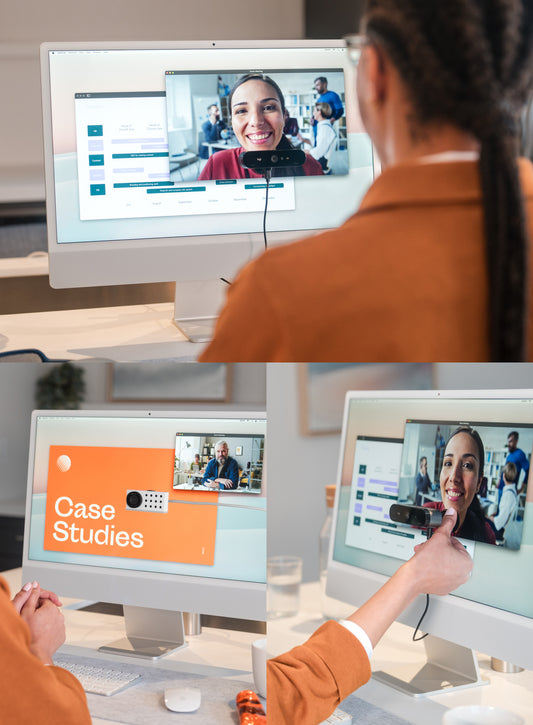
Picture a physician mid-consultation. The patient's face is near the center of the display. Rather than glancing up at a camera mounted above the monitor, the physician places the webcam next to the patient's on-screen face. Now the lens lines up with the clinician's natural gaze, and eye contact stops being something they have to perform.
How Mag2 improves the telehealth experience
It puts the lens next to the patient. Every telehealth interface is different, and patient windows land in different places depending on the software, the display, and the workflow. Mag2 lets clinicians move the camera to wherever the patient's face is, so looking at the patient and looking at the camera become the same thing.
It adapts to how clinicians actually work. Providers do more than video calls on their screens. They review records, document encounters, and check clinical references, often across several applications. A camera bolted to one spot rarely suits all of that. Mag2 lets clinicians reposition as their workflow changes.
It keeps conversations natural. The point isn't to stare into a lens for twenty minutes. Real conversations include looking away, thinking, reading, and taking notes. Mag2 simply makes direct visual connection easy in the moments a clinician wants it.
It fixes the problem physically, not digitally. Some tools try to correct eye contact with software that alters a person's apparent gaze. Mag2 takes the simpler route: move the actual camera. No AI-generated eyes, no uncanny effects, just a lens in the right place.
Why healthcare organizations should care
As telehealth becomes a permanent part of care delivery, organizations have an opportunity to look past bandwidth and video resolution. The physical setup matters too. Camera position shapes how a clinician appears on screen, how comfortable they are engaging with patients, and how naturally the visit unfolds.
For telehealth providers, Mag2 offers a flexible upgrade that works with existing virtual-care platforms rather than replacing them. For healthcare IT teams, it spotlights an often-overlooked piece of the patient-facing environment: the hardware. For clinicians, it means more control over a setup that fits their screen, their software, and the way they practice.
A small hardware change, a more human visit
Telehealth innovation usually gets framed in terms of sophisticated software and artificial intelligence. But meaningful improvements can come from rethinking something as ordinary as where the webcam goes.
The camera doesn't have to live above the screen. It can live where the conversation happens. That's the idea behind PlexiCam Mag2, and for clinicians it's a simple way to bring patients a little closer, even from miles away.
Because the future of virtual care isn't only about connecting patients and providers. It's about making those connections feel personal.
PlexiCam Mag2: Put your webcam where connection happens. Learn more about Mag2.